
Keeping your accounting software current is not just a technical task—it’s a business necessity. If you rely on Sage 50 for day-to-day bookkeeping, payroll, inventory, or compliance reporting, learning how to update sage 50 correctly can save you from data errors, security risks, and performance issues. Many Windows users delay updates because they fear data loss or compatibility problems, especially after moving to Windows 10 or Windows 11. In reality, timely updates are designed to make the software more stable, secure, and efficient. If you ever need guided help while updating, you can also reach experienced assistance at update sage 50 +1-844-341-4437 during the process.
This detailed guide explains everything you need to know—from preparation and step-by-step instructions to common issues and best practices—so both users and search engines clearly understand how Sage 50 updates work in modern Windows environments.
Understanding Sage 50 and Why Updates Matter
Sage 50 is widely used by small and mid-sized businesses for accounting, invoicing, inventory tracking, and tax-ready financial reporting. Like any desktop-based accounting application, it depends heavily on system compatibility and secure code.
Regular updates are released to:
Fix known bugs and stability issues
Improve compatibility with Windows updates
Strengthen data security and encryption
Add minor feature improvements or compliance fixes
Failing to update Sage 50 can result in software crashes, slow performance, incorrect calculations, or errors when opening company files—especially after Microsoft releases major Windows patches.
Update Sage 50 vs Upgrade Sage 50: Know the Difference
Before proceeding, it’s important to understand a common point of confusion.
What Does “Update Sage 50” Mean?
An update refers to installing the latest patches or builds within the same version of Sage 50. Updates are usually free and focus on:
Bug fixes
Security improvements
Performance enhancements
What Does “Upgrade Sage 50” Mean?
To upgrade sage 50 means moving from an older version to a newer release (for example, from Sage 50 2022 to Sage 50 2024). Upgrades may include:
New features
Interface improvements
Extended Windows compatibility
This guide focuses primarily on updates, but also explains when an upgrade is the smarter long-term choice.
System Requirements for Updating Sage 50 on Windows
Before you update Sage 50, confirm that your system meets the basic requirements.
Supported Operating Systems
Windows 10 (64-bit recommended)
Windows 11 (latest builds supported by Sage)
Hardware Recommendations
Minimum 8 GB RAM (16 GB preferred for multi-user setups)
SSD storage for faster file access
Stable internet connection
Software Prerequisites
Latest Windows updates installed
Microsoft .NET Framework enabled
Administrator access on the system
Meeting these requirements ensures the update process runs smoothly without interruptions.
Important Preparations Before You Update Sage 50
Skipping preparation is the most common reason updates fail. Follow these steps carefully.
1. Back Up Your Company Data
Always create a full backup of your Sage 50 company file. This protects your financial records if something goes wrong during the update.
2. Close All Sage Programs
Make sure Sage 50 is closed on all systems, especially in multi-user environments.
3. Disable Antivirus Temporarily
Some security tools may block update files. Disable them briefly during installation and re-enable afterward.
4. Check User Permissions
Log in as a Windows administrator to avoid permission-related errors.
How to Update Sage 50 on Windows 10
Updating Sage 50 on Windows 10 is straightforward if you follow the correct steps.
Step 1: Open Sage 50
Launch the software normally on your system.
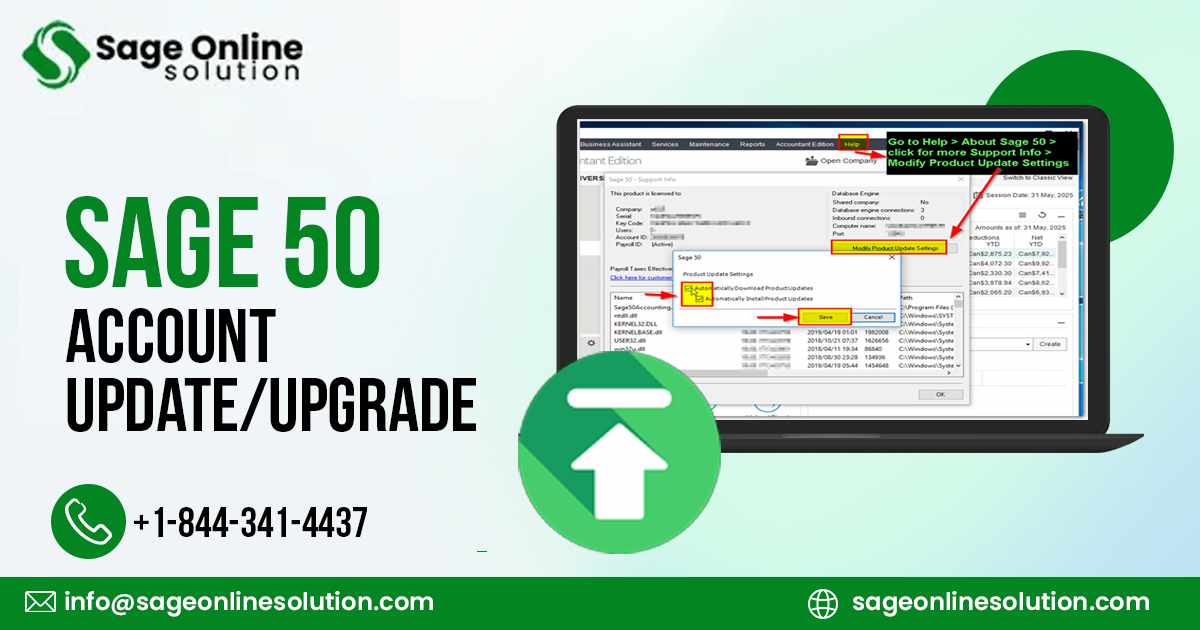
Step 2: Check for Updates
From the top menu, navigate to:
Help → Check for Updates
If a new update is available, Sage 50 will notify you automatically.
Step 3: Download the Update
Follow the on-screen instructions to download the update file. Ensure your internet connection remains stable during this step.
Step 4: Install the Update
Once downloaded, the installer will launch automatically. Accept the license agreement and proceed.
Step 5: Restart the System
Restarting Windows 10 ensures all update components integrate properly.
After restarting, open Sage 50 and verify the version number under Help → About.
How to Update Sage 50 on Windows 11
Windows 11 introduces additional security layers, so the process includes a few extra checks.
Step 1: Run as Administrator
Right-click the Sage 50 icon and select Run as Administrator before checking for updates.
Step 2: Allow Windows Security Prompts
Windows 11 may ask for confirmation during installation. Approve all legitimate prompts.
Step 3: Complete Installation
Follow the same steps as Windows 10 for downloading and installing the update.
Step 4: Verify Compatibility
After installation, open your company file and confirm reports, payroll, and inventory modules load correctly.
Updating Sage 50 in a Multi-User Environment
If Sage 50 is installed on a server with multiple workstations:
Update Sage 50 on the server first
Restart the server
Update Sage 50 on each workstation
Ensure all systems use the same version
Skipping this order can cause data access errors and version conflicts.
Common Errors While Updating Sage 50 and How to Fix Them
Update Fails to Install
Check administrator permissions
Disable antivirus temporarily
Ensure enough disk space
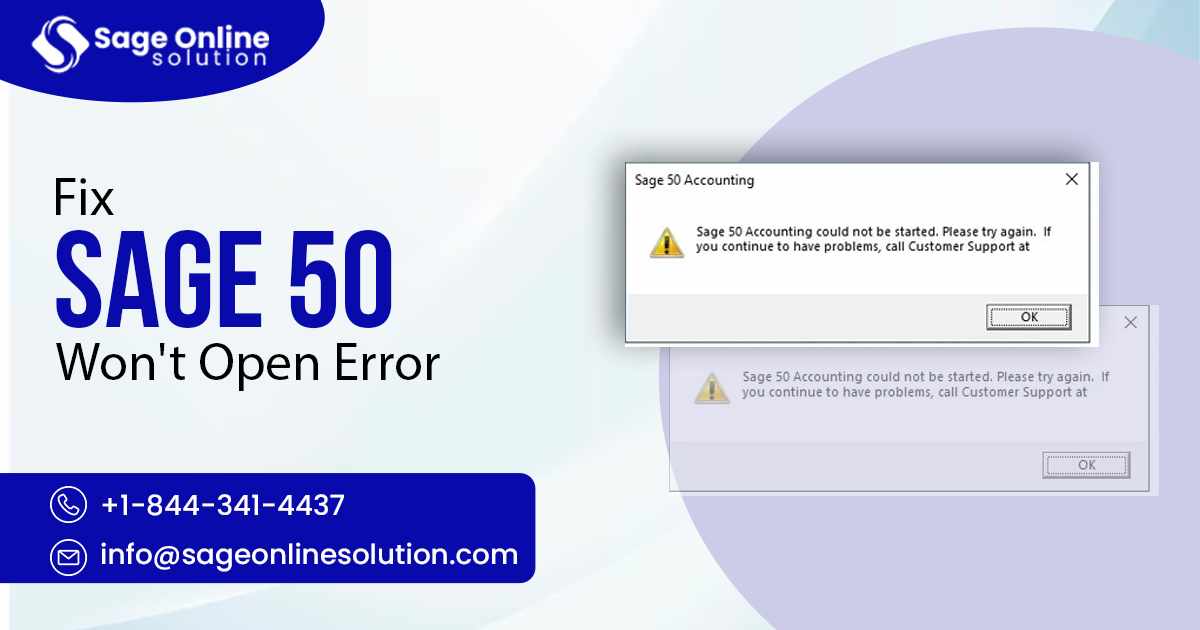
Sage 50 Won’t Open After Update
Restart Windows
Repair the installation
Verify Windows updates are current
Company File Won’t Load
Restore the latest backup
Check file location permissions
Confirm all users are on the same version
Most update issues are solvable with basic system checks when addressed early.
When You Should Upgrade Sage 50 Instead of Updating
Sometimes, an update isn’t enough. You should consider upgrading if:
Your version is no longer supported
Windows updates cause repeated errors
You need new features or compliance updates
An upgrade ensures long-term stability and full compatibility with Windows 10 and Windows 11.
Best Practices for Keeping Sage 50 Updated
Enable update notifications
Schedule updates during off-hours
Maintain regular backups
Document version changes for audits
These practices reduce downtime and protect financial accuracy.
FAQs: Updating Sage 50 on Windows
Is it safe to update Sage 50 on Windows 11?
Yes. Updates are designed to improve compatibility and security with newer Windows versions.
Will updating Sage 50 delete my data?
No, updates do not remove company data. However, backups are always recommended.
How often should I update Sage 50?
Check for updates monthly or whenever Sage releases a new patch.
What if the update fails repeatedly?
In such cases, professional guidance using the same support number mentioned earlier can help identify system-specific issues without risking data loss.
Final Thoughts
Learning how to update sage 50 correctly on Windows 10 and Windows 11 is essential for maintaining accurate records, strong security, and smooth performance. Whether you’re applying a routine patch or planning to upgrade sage 50 for long-term benefits, following the right steps prevents unnecessary downtime and errors. Regular updates keep your accounting system aligned with modern Windows environments and evolving business needs. If you need reliable, step-by-step assistance at any stage, expert help is available at update sage 50 +1-844-341-4437, ensuring your software stays current, secure, and fully functional.

![【[[+1.844.341.4437]]】What Should I Know Before I Install Sage 50 Accounts Software?](https://sk0.blr1.cdn.digitaloceanspaces.com/sites/872509/posts/2026120/Sage-50-Download-Install-Price-tqsbwpcxsy1783406529.jpg)
![【[[+1.844.341.4437]]】How to download sage 50 accounting software for free trial?](https://sk0.blr1.cdn.digitaloceanspaces.com/sites/872509/posts/1985166/how-to-download-sage-50-2026-luhewzpgdf1781766867.png)






Write a comment ...